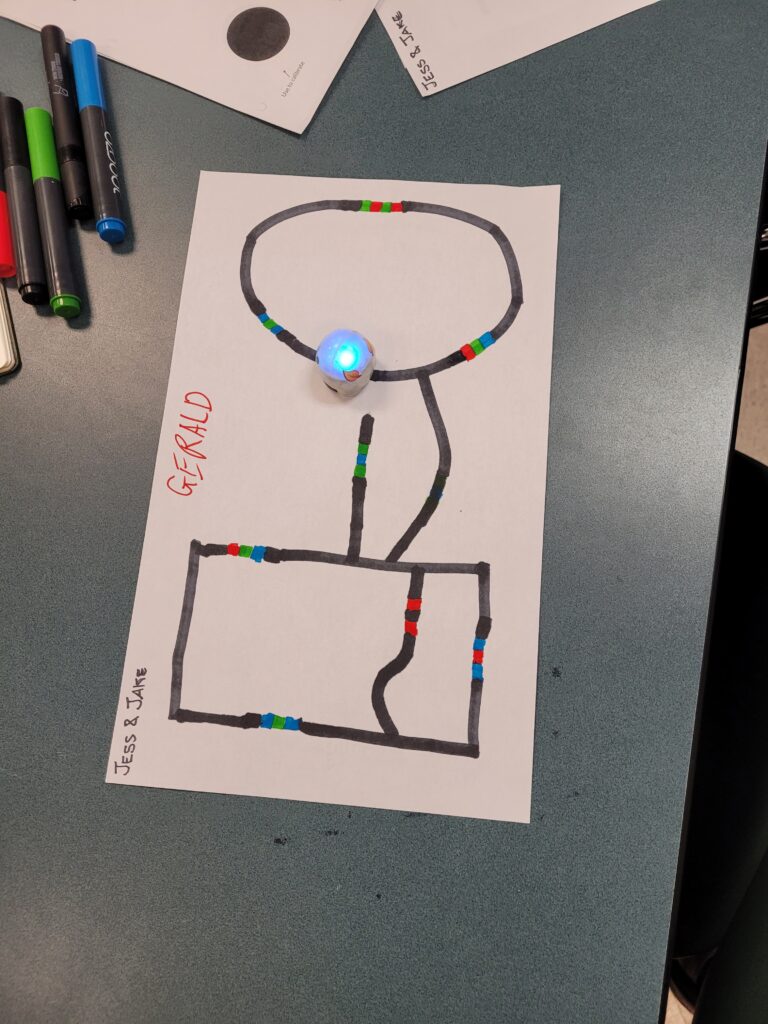
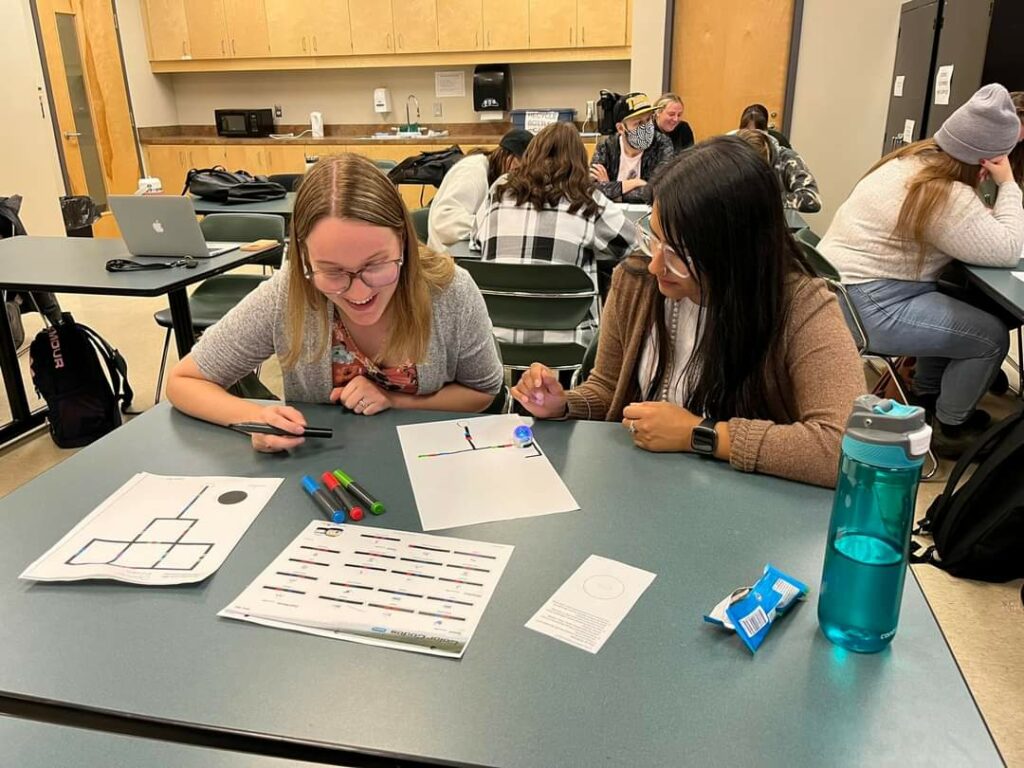
Ozobot coding uses little robots that introduces coding where students use color combinations to move the Ozobot on the path from one location to another. The Ozobot activity in class was engaging as it built on team work and creative ideas for making a circuit. It also explores the seven principles of learning.
The Ozobot activity demonstrated the key concepts of the first principle “Learners at center” as it allows students to be engaged the entire time. It also allows them to explore and construct their own learning through testing and assessing. Working with a partner or a group also allows learning through co-operation.
The second principle, “the social nature of learning” is incorporated into this activity as it allows students to work with one another as a variety of skills are combined to create circuits for the Ozobot to run through. This task is organized and it has structure and guidelines to follow. Some students may be hesitant to work in groups however, this activity allows students to engage in the second principle of “pushing learners of all abilities” out of their comfort zone and into social interaction.
The third principle “emotions are integral to learning” was incorporated into this activity as the task can elicit certain emotional responses while working in a group. A student may feel nervous and anxious about giving their input for a circuit run. They may not feel confident in themselves. However, as the group works through creating the variety of different runs, that student’s confidence may start to build as they observe how to construct the runs. That student may work towards sharing their own ideas on a circuit run.
The fourth principle “recognizing individual differences” relates to this Ozobot activity as it is highly engaging and allows students to discuss their ideas while testing and re-assessing. Some students may not be used to working in groups or with hands on activities. It allows the classroom to be adaptable by engaging in a coding exercise to support individual learners and group work as well.
The fifth principle “stretching all students” is incorporated into this activity as grouping students who are experienced in coding with students who are less experienced, allows the experienced students to support the less experienced students. By having the experienced students teach and lead the activity, they are practicing their communication and leadership skills. For those students who may not prefer coding, they are working on their flexibility skills while learning key critical thinking skills.
The sixth principle “assessment for learning” is incorporated into this activity as the instructions that are given for this activity provide clear steps of what is expected and what learners are asked to do. As well as, the teacher has the opportunity to walk around and provide feedback on how the Ozobot will best respond to the lines.
The last principle “building horizontal connections” is incorporated into this activity as authentic learning is seen through the creativeness of this activity and allowing students to think about how the skills in the activity relate to the outer world. Creating codes can be useful in the future as key concepts of constructing patterns and critical thinking skills can be used in everyday life.
I enjoyed this activity as it got me thinking about the ways in which I could incorporate coding in my classroom to make it more hands-on and fun for all students!